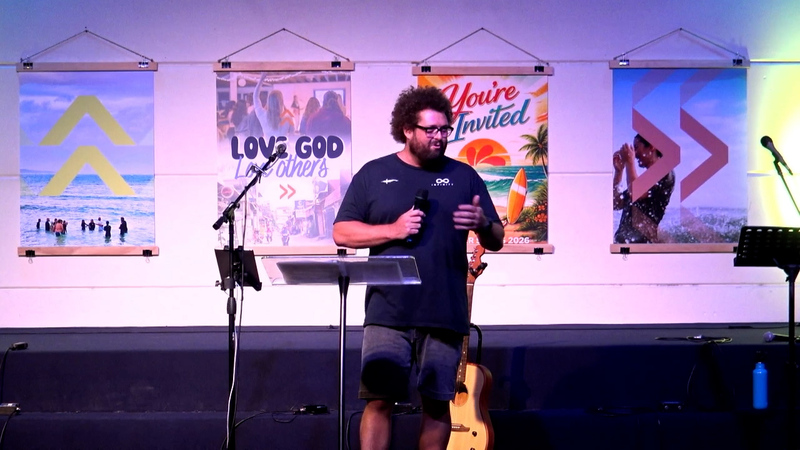
What if the Christian life was never meant to be walked alone? This powerful message challenges us to reconsider our understanding of faith as an individual pursuit and invites us into the biblical vision of partnership and community.
This message traces God's design for community from Genesis through the early church, revealing that from the very beginning, God created humanity not just for relationship with Him, but for relationship with one another. The Hebrew concept of 'koinonia'—deep, active partnership rooted in shared life with Christ—emerges as the heartbeat of authentic Christian community.
We discover that the 'one another' commands scattered throughout the New Testament aren't suggestions but essential practices: love one another, serve one another, encourage one another, bear one another's burdens. This isn't about filling church rosters or maintaining religious obligations; it's about entering into the messy, beautiful reality of sharing life and mission together.
When we bring our unique gifts, passions, and strengths into community, something extraordinary happens—like individual voices creating breathtaking harmony, we become more than the sum of our parts, reflecting the image of the Triune God who exists in perfect community.
Discussion questions:
1. The sermon suggests that 'if you focus on community, you never quite get there, but if you focus on a shared endeavor together that's missional, out of that comes extraordinary community.' How does this reframe your understanding of building authentic relationships?
2. What does it mean that Israel's communal life was designed to 'provoke curiosity about God and clarity of who he is,' and how should that shape how we live as the church today?
3. Why do you think Jesus prioritized forming a community for mission rather than simply preaching to crowds, and what does this teach us about God's design for His people?
4. What unique strengths, talents, or passions has God placed in your life that are 'mission critical' to what He is doing in the world, and how might you steward these in partnership with others?
5. In what practical ways can you move from being a spectator to a participator in God's mission, both within your church and in your everyday life?